How to dismantle the objections to digitalization — and build a strategy that actually delivers value.
You want to start digitalizing your company, or accelerate work already underway, but colleagues, employees and even managers keep raising objections. This article covers the five arguments that come up most often against digital transformation projects — and why the evidence does not support any of them. Use them to answer criticism, and to build a case that holds up in a budget meeting.
One thing has changed since these objections were first framed, and it runs through every section below: the bottleneck is no longer the technology. It is the data. A process you cannot trace, on data you cannot explain, produces automation nobody signs off on. That is why data governance now belongs in the digital transformation strategy from day one, not bolted on after go-live.
What digital transformation actually means for a company
Digitalization of companies describes the growing share of business activity that runs on digital processes rather than manual ones. It is the foundation for digital transformation, where organizations change how they work and how they are structured to match a digital operating model. Both internal organization and customer interaction sit at the centre of that change.
Artificial intelligence and adjacent technologies play a decisive role in optimizing those processes. Manual tasks can be automated and made measurably more efficient. Enterprise software makes it possible to connect different categories of process end to end and improve collaboration across departments — which raises the level of digitalization inside the company and, in most cases, feeds through to revenue.
Customer expectations are the second driver. Customer needs now shape business decisions far more directly than they did a decade ago, and the intelligent use of data and AI lets companies offer personalized services at a scale that manual work cannot match.
What has shifted more recently is where the constraint sits. For most organizations, technology is no longer the limiting factor — data is. AI models produce unusable output on undefined data. Regulators expect lineage on demand. Business users refuse to trust a dashboard whose numbers they cannot trace back to a source. A digital transformation strategy that automates processes without governing the data underneath them simply automates the existing confusion, faster.
Benefits of digital transformation
- Higher efficiency: manual processes are automated and accelerated, raising throughput without raising headcount.
- Lower cost: automated processes tie up fewer people and fewer resources, reducing total operating cost.
- Better decisions: digital tools capture and evaluate large data volumes, giving management evidence instead of anecdote.
- Improved customer service: digital channels let companies reach customers faster and serve them better.
- Flexibility: business processes can be managed from anywhere, at any time.
- AI readiness: governed, well-described data is the precondition for any AI use case that has to survive an audit.
Common digital transformation challenges
- Technology cost: implementation can require significant up-front investment.
- Adoption: adapting to new tools and processes is a real challenge for part of the workforce.
- Data security: a wider digital footprint increases exposure to breaches and data loss.
- Technology dependence: outages hurt more when operations run on digital systems.
- Ungoverned data: the challenge that derails most programmes — duplicated master data, undocumented definitions, no lineage, no ownership.
Why data governance decides whether the strategy delivers
Ask three departments for “revenue last quarter” and you will often get three numbers. None of them is wrong in its own system; they simply rest on different definitions that nobody ever reconciled. Scale that across a company and every automated process inherits the ambiguity.
A data governance framework fixes four things that no process automation project can fix on its own:
- Ownership: a named person is accountable for each data domain, so questions have an address.
- Definitions: business terms are documented once, in language the business actually uses, and referenced everywhere.
- Lineage: every figure can be traced from the report back to the system that produced it — which is what auditors and regulators ask for.
- Quality rules: data is validated at the point of entry rather than corrected in a spreadsheet three weeks later.
SoftProject covers this layer with dataspot. for business-oriented governance and lineage, and MyDataCatalogue as the catalog where those definitions live. Both sit alongside process automation rather than replacing it — which is the point.
“Automating an ungoverned process does not remove the problem. It multiplies it.”
The rest of this article works through the five objections you are most likely to hear, and shows what the evidence says about each.
“Is digitalization destroying jobs?”
Insurance, manufacturing, energy, logistics, services, retail, tourism — digital transformation reaches every sector and every company. Some sooner, some later, but none are exempt. If a company wants to stay competitive, there is no route around it. So what does that mean for jobs, and what is behind the claim that digitalization costs millions of people their livelihoods?
The evidence points the other way. New technologies open up new business models, new services and new products. They strengthen market position and make employers viable for longer. Companies can secure existing jobs with them and create additional ones.

Digitalization raises productivity by synchronizing activities, improving communication and shortening process cycles. As a driver of innovation it also supports the development, marketing and sale of new products and services — which can be offered at lower cost because the processes behind them are automated. That keeps work and orders from migrating to low-wage locations. New offerings create new demand, and new demand increases staffing requirements.
Research from the Cologne Institute for Economic Research reaches the same conclusion: across all industries, advancing digitalization creates more jobs on balance than it removes. Analysis by Bain & Company found that industrial digital leaders grow roughly 50 percent faster than their competitors and are up to 30 percent more profitable.
“Companies digitalize in order to secure jobs — including their own existence as an employer.”
The second issue here is demographic, and it is getting sharper. Digitalization is part of the answer to the shortage of IT specialists, because IT and digital processes now touch almost every business function. Filling every one of those roles with a highly qualified expert is effectively impossible, expensive and unprofitable. The software industry recognized this and developed the low-code and no-code approach in response. It lets people outside IT build applications and digitalize processes themselves, which relieves the developer bottleneck and accelerates delivery at the same time. Companies are already training employees to operate a low-code platform in a matter of weeks. That is a smart move that also pays the employee: digital upskilling usually comes with a higher, better-paid professional grade.
Governance work follows the same pattern. Data stewardship is a role a business analyst can grow into with training, not a job that requires a data engineering background. The people who best understand what a customer record means are already in the business.
Put all of it together and the reverse conclusion holds: companies that do not digitalize fall behind — and prevent new jobs from being created in the first place.
The truth
Companies digitalize in order to secure jobs and secure the business. The idea that machines and software simply replace people is short-sighted and ignores what digitalization opens up. As a driver of new business models, products and services, it creates more roles than it removes. It also cushions the effects of demographic change and the IT skills shortage — securing the competitiveness not just of the individual company but of Germany as a business location.
“Do companies lack the expertise to digitalize?”
First things first: a company does not need deep in-house IT expertise to digitalize. Not every decision-maker knows this, and the list of concerns is long — legal uncertainty, binding IT security requirements, gaps in employee skills, investment cost, missing technical standards. Behind those sit softer concerns too: comfort zones, and fear of technical, organizational and cultural change.
Part of the problem is definitional. There is no single shared understanding of what “digitalization” means, and depending on context the interpretations diverge wildly, which makes it hard for decision-makers to see the concrete potential. Seeing that potential is what creates internal acceptance and lets a project start at all. Without specialists who can assess the implications of different scenarios accurately, it is close to impossible to make the potential tangible and draw the big picture. Once the picture and the strategy are agreed, the defined pilot project can be implemented by the company’s own staff.

What matters here is not digitalization know-how but the specialist departments’ knowledge of what a given process actually requires. Thanks to the low-code approach they can map and execute that business process on a graphical interface without writing code. After a short training session, they assemble standardized, pre-built, reusable process building blocks by drag and drop — producing processes that are targeted, free of media breaks, on time and within budget. Typical examples: automated data, document and order handling; simplified and connected information and communication flows; cloud-based management of suppliers, service providers and customers; and the networking of people, machines and systems.
Using intelligent metadata and component libraries, the low-code platform orchestrates those building blocks into an executable, automated process — without complex code and without a developer in the loop. Companies do not wait for scarce, expensive IT capacity; they start now.
“Companies can start digital transformation projects immediately, without building their own digitalization expertise first.”
Applications are delivered far faster than with traditional programming, which cuts cost again. With graphical rule editors that are about as demanding as a spreadsheet, department heads and case workers can control process flow themselves by configuring escalation and workflow rules — automated task assignment, resubmission of critical documents, digital invoice verification, changes to access rights.
Processes modelled with low-code are reusable and traceable, which hand-written code often is not. Bespoke code tends to produce isolated solutions with high administration overhead, hard dependencies, creeping monoliths and a real risk of losing sight of the project. Low-code platforms counter this with dashboards and self-explanatory diagrams that present relevant data and processes transparently — readable by the business, not only by IT.
The same logic applies to data. A data catalog makes definitions accessible to the people who own them, so the business no longer has to ask IT what a field means. Expertise is not imported; it is surfaced.
The truth
Companies can launch digital transformation projects immediately without their own digitalization expertise. The decisive factor is management recognizing the opportunity. A low-code platform gives the people doing the implementation a framework of proven solutions for typical tasks, which lowers both start-up cost and error rate. It brings immediately usable IT capability into the company without dedicated developer resources — and it puts specialist departments directly into the transformation rather than leaving them as spectators.
“Is digital transformation too expensive?”
At first glance the cost deters people. But the investment that is not made will be paid for later, with interest. Digital transformation is not only a software purchase; it requires a full-lifecycle view of cost. Alongside change management, operating and process costs sits the item almost everyone omits: opportunity cost — the cost of what did not happen. Savings never realized because a process stayed manual. Product launches slowed by long time-to-market. New services that developed too slowly. Revenue never earned because there was no digital sales channel.

The cost of waiting is routinely underestimated, because total opportunity cost overtakes implementation cost quickly. At the same time, complexity costs in digitalized companies fall by around 20 percent on average. Cloud-based deployment removes the need to invest in owned infrastructure and lets capacity scale with demand. Cloud and digitalization together enable an agile operating culture: they harmonize processes, methods and tools, improve communication, and let products be tested and released faster. Growth and new revenue follow from that, not the other way around.
Comparing the cost of a planned project against the manual work the same budget could buy is another way to make digitalization look expensive. It is also short-sighted. Companies that leave routine tasks manual — invoice receipt and verification, quotations, pricing, calculations and expert reports, order and contract management, HR, scheduling and leave management, time recording, payroll processing, or industry-specific work such as repair, damage and fault reports or utility connection applications — get overtaken by more innovative competitors. What follows is usually a costly and futile catch-up.
“Digitalization continuously reduces opportunity cost, raises return on investment and opens new revenue streams.”
It is equally wrong to pull a single process out of context and conclude the project is too small to be economical. That is a naive calculation. Successful digital transformation needs a holistic approach and a strategy aligned to overall business goals — one that accounts for future savings and future profit as well as opportunity cost.
Where it genuinely does become expensive is fragmentation: buying an additional tool every time a new requirement appears. That produces a maintenance-heavy, error-prone patchwork with information silos and media breaks — a sprawling IT estate that frustrates employees and destroys the potential for growth, scale and innovation. The answer is a platform that handles as many interfaces and formats as possible under one roof.
Governance belongs in the same calculation, and it is usually left out. Data quality issues surface as rework, failed migrations, disputed reports and — increasingly — as findings in audits. Those costs are real, they are recurring, and they do not appear on the software line item. Related reading: IT Architecture: Types, Examples and How to Choose the Right One.
The truth
Once the initial implementation hurdle is cleared, digitalization continuously reduces opportunity cost, increases ROI and opens new revenue sources. It raises productivity and lowers complexity, build and maintenance costs — and with low-code, development cost as well. A single platform that can carry every digitalization project reduces cost further and delivers scalability through efficient, media-break-free processes.
“Are digital transformation projects too complex?”
Decision-makers often picture one enormous, complicated undertaking with a high chance of wasted money. That concern is straightforward to dispel: even the largest programme is a sequence of small sub-projects that build on one another. The key to a workable digital transformation strategy is to hold the end-state picture in mind while taking steps small enough to complete quickly.
Start with a sub-process that is not too complex, produces measurable results, can be delivered in a sensible timeframe and is visible across several parts of the business. Automating invoice receipt and verification, or order distribution and control, are proven entry points. The goal is a visible win that builds internal acceptance and opens the door to the next project. For that to work, technical feasibility has to be validated up front and the agreed scope has to hold. Far too often, extra requirements are added mid-flight until a contained sub-process has swollen into a large programme loaded with business logic — exactly the outcome the staged approach was meant to avoid.
“Even partially digitalized processes pay for themselves.”
The secret is lean structure, focus, and a platform whose adapters and building blocks fit the way the organization already works — lean management, total quality management, business reengineering, Kaizen, DevOps — with consistent support across every phase. Companies use it as the vehicle for putting new structures and smoother processes in place quickly, improving communication, conserving resources and responding to change in small, continuous increments.

Recent years have made the payoff visible. Organizations that had already digitalized collaboration and core processes moved to distributed work without interruption and stayed decision-capable; those that had postponed it responded slowly and spent a long time absorbing the consequences. The pattern repeats with every disruption: prior digitalization is what buys the ability to react.
One more point worth knowing: the more sub-processes you automate, the easier each subsequent one becomes. The same compounding applies to governance — every documented definition and every mapped lineage path makes the next data project shorter.
The truth
Digital transformation projects are genuinely complex. But implemented professionally with the right tooling, that complexity can be pushed down far enough that the company barely encounters it — the low-code principle — and can concentrate on the business question instead. Staging the work reduces the perceived size of the overall goal. A scalable platform that grows with requirements is what makes the staging possible.
“Aren’t our existing IT systems enough?”
Digital transformation is multi-dimensional. The BITKOM maturity model for digital business processes describes four:
- Technology: the technology base, process tooling and system integration.
- Data: data capture, data provision and data use.
- Quality: process description, execution and safety.
- Organization: the digitalization strategy, training and change management.
Against that model it becomes clear that ERP, CRM, ECM, DMS and PIM systems can only cover partial tasks. They are not designed for end-to-end digitalization. They are the right choice for planning and controlling resources, managing customer contacts, handling information and documents, or centralizing product data — and for those jobs they remain indispensable. But their functional range and interface coverage are too narrow to carry a transformation.
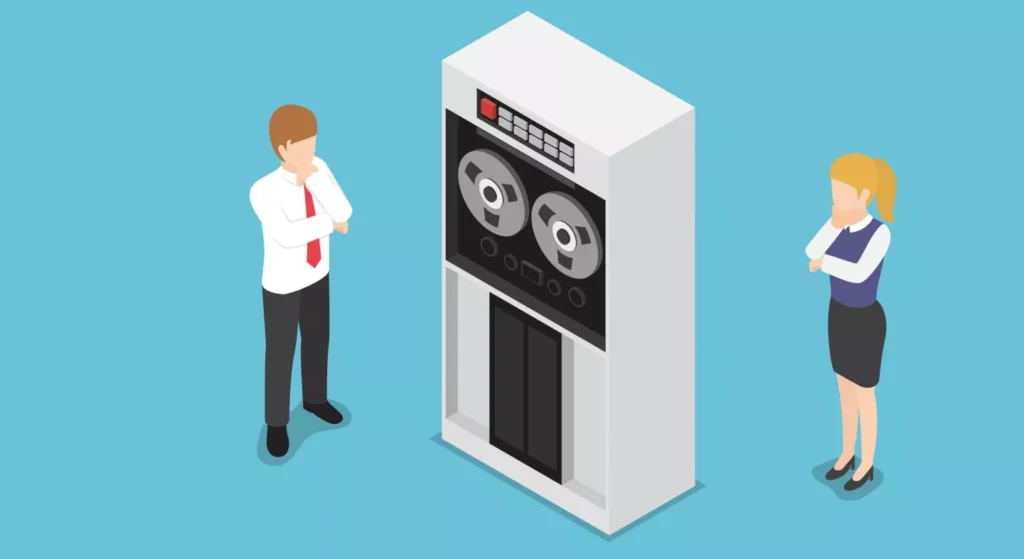
These systems reach their limits as soon as the solution has to be extended, a new business model tested, a new market entered or a new service launched. That calls for a platform with a broader functional footprint — one that considers not only the process but the data, rules and functions underneath it, and that connects to existing third-party systems and cloud services through adapters. Ideally it also opens the door to IoT, big data and machine learning.
Data sits at the centre of every digital business process and of the transformation as a whole. Only companies that succeed in collecting data from disparate IT systems through interfaces, and preparing it for a clean, media-break-free flow, capture the full benefit. Systems built for a single sub-task scratch the surface and leave the deeper data untouched. What is needed is a solution that treats the transformation holistically: integration through to operation, usable by as many employees as possible including non-IT staff, and powerful enough to handle every digitalization task.
“Logistics has its own solution. Customer management has its own solution. End-to-end digitalization needs one too.”
This is also where industry-specific accelerators matter — the automated grid connection process for utilities, electronic claims settlement for insurers, portal and self-service solutions for administrators, customers or suppliers. Cloud offerings with ready-made building blocks for standard processes are frequently cheaper than bespoke development. Private, public and hybrid models are all viable; a hybrid concept has the advantage that standard industry processes and interfaces can run in the cloud while back-end connectivity and company-specific processes stay in an own data centre, ideally certified to ISO/IEC 27001 for information security.
The mistake to avoid is inflating the core system with individual point solutions every time a new requirement lands. That creates uncontrolled growth, multiplies supplier dependencies, raises administration and maintenance cost, and slows innovation to a crawl. What replaces it is a single environment in which all data and all processes can be controlled, monitored and scaled to requirement, without media breaks.
The same applies to the data layer. Master data scattered across ERP, CRM and a dozen spreadsheets cannot be governed retroactively by adding another tool. It needs master data management and metadata management as part of the platform, not as an afterthought. See also: Seamless integration of SAP with other systems.
The truth
The standard software in place at most companies is not sufficient to carry a digital transformation. Just as there are dedicated solutions for financial management, logistics and warehousing, or customer management, digitalization requires its own. That is the only way to realize the full potential — integrating IT systems, data and people into processes, and opening up cloud computing, machine learning and big data on top.
The SoftProject platform portfolio at a glance
SoftProject covers digital transformation across four capability areas and four products. The four areas describe what the platform does; the products are what you license and deploy.
Capability areas
| Area | What it addresses | Typical starting point |
|---|---|---|
| Data Governance | Ownership, definitions, lineage and quality for business-critical data — the layer that makes reporting and AI defensible. | Conflicting numbers across departments; an audit finding; an AI project blocked on data quality. |
| Seamless Integration | Connecting ERP, CRM, legacy systems, cloud services, machines and partners without point-to-point sprawl. | A migration, a new system to connect, or an integration estate nobody wants to touch. |
| End-to-End Automation | Modelling, executing and monitoring business processes across system and department boundaries. | A high-volume manual process — invoice verification, order handling, claims. |
| AI Enablement | Putting AI to work on processes and data that are governed well enough for the output to be trusted. | An AI pilot that produced promising demos and unusable production results. |
Products
| Product | Role | Key capabilities |
|---|---|---|
| X4 BPMS | The low-code process platform — model, integrate, automate, monitor. | BPMN 2.0 modelling, 200+ prebuilt adapters, integrated ESB, Process Monitor, Rules Engine. |
| Phoenix | Enterprise integration and execution governance. | Controlled execution across systems, oversight of distributed integration flows. |
| dataspot. | Business-oriented data governance and lineage. | Business glossary, data lineage, ownership and stewardship, regulatory traceability. |
| MyDataCatalogue | The data catalog. | Discovery and documentation of data assets, definitions the business can find and use. |
Within Data Governance, dedicated capabilities cover Data Catalog, Data Platform, Master Data Management, Metadata Management and Data Sovereignty. Where an assessment is the right first step, SoftProject also offers consulting.
How the pieces fit
Most companies arrive from one of two directions. Either a process needs automating and it turns out the data underneath it is not fit for purpose — or a governance programme runs into processes that nobody has documented. The portfolio is built so that neither entry point is a dead end: process automation and data governance sit on the same platform, so the second project does not require a second vendor.