

API-Management

API Management: the key to orchestrating, securing and optimising the exposure of your APIs. Transform your information system into an integrated, open ecosystem – under control. Unleash the potential of your APIs!

You are currently viewing a placeholder content from YouTube. To access the actual content, click the button below. Please note that doing so will share data with third-party providers.

More Information
What is API Management?

What does APIM mean in practical terms?

An API Management solution will enable you to expose your data or services to your ecosystem (customers, partners, suppliers, etc.) as well as to your internal applications.

API Management is designed to provide a response to the challenges of scalability, repeatability and the API lifecycle. An API Management solution will make it possible to govern APIs, by managing the publication, promotion and supervision of data exchanges between the supplier service and the customer service. All within a secure, scalable environment.

The principle is to get different systems talking to each other, automating exchanges to achieve real time. There’s no need to reinvent standards! The important thing is to communicate as widely as possible. API Management is designed to increase the number of exchanges. However, they must be standardised, because this approach must not be limited to the technical construction of APIs, forgetting the associated governance.

The governance of APIs is an obvious response to the proliferation of exchanges with partners. It must enable the convergence of your data exchanges within your information system, but also act as a single point of entry for the outside world.

API Management platforms will mainly :

  • Offer an API portal; this structures the relationship between the outside world and your internal information system.
  • Standardise APIs and establish a clear framework of responsibilities for everyone involved; this ensures the scalability of the model.
  • Controlling the “Who, When, What, How”; this ensures that all exchanges are secure, while offering the platform’s ability to monetise.

While API Management solutions are essential for governing the exchange of information with your partners and the life cycle of APIs, it is important to identify their limits. An API management solution is not designed to create APIs, but to manage their exposure! APIs must be created upstream.

The API Management solution therefore exposes services that already exist within the information system. Its aim is not to structure or urbanise your internal IS.

Edouard Cante, CPO SoftProject GmbH

Édouard Cante

Chief Product Officer

“The spirit of an API is to be standardised! Without governance, this would mean creating as many interfaces as there are data consumers. That would go against the very foundations of this approach.”

Download our data governance Whitepaper

Build a trustworthy data foundation to enable AI-driven automation and reliable decision-making

What are the use cases for API management approaches?

The implementation of API Management is particularly effective in organisations with a certain level of technological maturity, a desire to open up their information system to the ecosystem and which have embarked on an information system urbanisation process (e.g. service-oriented architecture).

Edouard Cante, CPO SoftProject GmbH

Édouard Cante

Chief Product Officer

The implementation of API Management is particularly effective in organisations with a certain level of technological maturity, a desire to open up their information system to the ecosystem and which have embarked on an information system urbanisation proces.

In the public sector

In companies

Understanding the role and benefits of API Management

The implementation of API Management is particularly effective in organisations with a certain level of technological maturity, a desire to open up their information system to the ecosystem and which have embarked on an information system urbanisation process (e.g. service-oriented architecture).

Edouard Cante, CPO SoftProject GmbH

Édouard Cante

Chief Product Officer
“The benefits are even greater if the platform also orchestrates the internal processes and services of your information system.”

Criteria for choosing an API management platform:

The benefits of API management platforms:

SoftProject platforms and API Management convictions

At SoftProject, we help our customers to implement their data strategy and governance using our Data Platform. Data exposure to the outside world and the ability to support an extended enterprise approach are just some of the challenges!

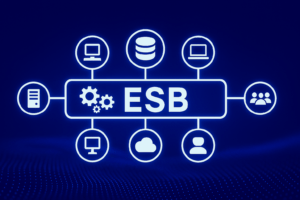
Our API Governance module is fully integrated into the Data Foundation (Application Bus & ESB) of our Phoenix platform. As a result, you create your APIs using the ESB (Enterprise Service Bus), which you then expose using API Governance.

We are convinced that API Management really benefits from relying on the urbanisation of the Information System and a service-oriented architecture (SOA) to build your exposable services, which will become your APIs. Indeed, to avoid forcing the response to fit within the technical scope of a tool, it is necessary to have a global vision of information exchanges: processes, data repositories, information transport and openness to the outside world.

SoftProject solution overview

Execute business processes with speed and reliability.

X4 BPMS enables organizsations to model, automate and run business processes efficiently in daily operations. By combining human tasks, integration and process logic, X4 BPMS ensures consistent execution, faster throughput and sustainable operational improvement.

Turn business processes into an enterprise backbone.

Phoenix enables organizations to orchestrate end‑to‑end business processes across people, systems and data. By embedding governance, transparency and control, Phoenix transforms complex workflows into a scalable and manageable operational backbone.

MyDataCatalogue

Turn business processes into an enterprise backbone.

MyDataCatalogue enables companies to discover, understand, and visualize their entire data ecosystem—both structured and unstructured data. Automated data collection, an intuitive catalog, and dedicated portals make collaboration easy and efficient.

dataspot.

dataspot — Metadata Management & Data Lineage 

dataspot adds metadata management, lineage, and data quality impact visibility, showing where data Quality is measured and how issues propagate across the data Landscape

Talk to an expert

Articles

FAQs

The API Gateway or API portal are components of API Management solutions. In the context of API management solutions, exposing a gateway-type architecture to the outside world ensures control of what comes from the outside and what is internal. The aim is to concentrate inputs and outputs in a single point in order to secure and control usage and associated access. The Gateway brick will offer all the functions associated with transcoding, exposure and optimisation of communications. It must also respond to scalability issues.

If we talk more broadly about the concept of a “portal”, using Blueway’s Phoenix platform as an example, there are several types within API Management solutions:

  • A dedicated portal for subscribers: consumer organisations can use a dedicated portal to see which APIs you have subscribed them to and access their consumption statistics. Access tokens secure all authentications.
  • A centralised, secure portal dedicated to monitoring your APIs: this enables you to manage all your APIs from a global, exhaustive view, upgrade them and configure their exposure. You can monitor the consumption and technical health of your APIs by retrieving all the logs and consumption statistics for your APIs. You can manage subscriptions and access to your APIs for your customers, suppliers or partners for the period and under the conditions of your choice.
  • A portal for developers: all the documentation for your APIs, how they are structured and the tools available will enable developers to carry out tests completely independently.

Application Programming Interfaces are not static, which necessarily makes them more complex to manage and control. Their lifecycle follows several stages, from development to retirement:

  • Design of the Application Programming Interface: objectives, technical requirements, documentation, etc.
  • Creation and development of the API
  • Testing and securing the API
  • Publishing the API: making it available, and setting up monitoring and logging mechanisms
  • API maintenance: updates, taking account of feedback, corrections, etc.
  • Withdrawing the API: identifying the impact, communicating with users, etc.

Implementing an API Management solution is not enough to meet the challenge of API-enabling your Information System. Before choosing an API Management solution, you need to take a step back and consider a number of questions: what services do you need to expose? For which business needs? What level of granularity do you expect? How mature is your ecosystem? What KPIs do you want to track?

Conversely, you should also bear in mind that there’s no point in exposing a service just because it’s available! Your integration and API strategy must be framed by your needs.

So it’s only once the first Application Programming Interfaces have been defined and are available within your information system that an API Management solution will make sense. However, it is not necessary to have all the APIs in place from the outset: the approach can very well be iterative! It’s best to avoid the Big Bang effect.

Organising exchanges within your company, but above all with your customers, suppliers and partners, not only contributes to the efficiency of your organisation, but also to the transformation of its business model. You need to be more connected and co-construct!

You need to improve your customers’ experience by increasing their satisfaction. But also by identifying new services to differentiate yourself, so that you can ultimately become a platform and a player in this ecosystem. That’s why you need to think about opening up your information system and sharing your data through APIM!

While it is possible to develop APIs using your own code and development frameworks, API management really benefits from being based on Information System urbanisation solutions. In either case, isolating the APIs already present in the internal Information System and clearly defining what comes from the outside and what is internal is an important step in exposing a gateway-type architecture.

You need to make a clear distinction between the orchestration of internal services, carried out by the ESB, and the governance of exchanges with the outside world, carried out by the API Management solution. It’s your transformation needs that define the value to be derived from each tool, not the other way round! This is one of our convictions at Blueway, and one of the cornerstones of our API Governance solution dedicated to API management and its complementarity with a microservices approach and Data Foundation, our ESB technology platform dedicated to the transport, manipulation and control of data!