
Home / Challenges / Choosing your Data Platform
The Data Platform: the foundation for collecting, enhancing and bringing to life all the data within your organisation, and transforming it into decisions and insights. Unleash the potential of your data!
You are currently viewing a placeholder content from YouTube. To access the actual content, click the button below. Please note that doing so will share data with third-party providers.
More InformationThe role of a Data Platform, or EDP (Enterprise Data Platform), is to centralise the collection of a variety of data, optimise its storage and manage its processing so that it can be used throughout the organisation. In this way, a single data platform can be used throughout the organisation, avoiding the creation of information silos!
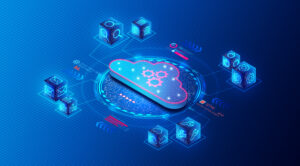
Its architecture is designed to enable interoperability with other systems, adapt to increasing volumes of data (and users), and offer intuitive interfaces. In doing so, it supports business decision-making processes by providing relevant information in near-real time.
Because they manage “traditional” files and databases, as well as more complex solutions involving Big Data, Data Platforms are the vectors that feed information systems (IS). They are therefore vital. With the development of the Cloud, Data-Driven strategies and the IoT (Internet of Things), use cases are multiplying, and platforms need to keep pace by adopting a Modern Data Platform approach.
A Data Platform refers to a technological infrastructure integrated into the information system, the main objective of which is to consolidate and transform raw data into usable information, to guide organisations’ decision-making, and also to facilitate the use of data by business tools and users. To do this, it integrates data from multiple sources, cleansing and structuring it to ensure its quality and consistency, and putting it to work for business processes and internal customers. Here are the main principles that govern it:
Although the terms data platforms and data integration platforms are sometimes used interchangeably, they cover different scopes – that of data platforms encompassing integration! While a data platform represents a centralised architecture that manages, circulates and analyses dispersed data, a data integration platform focuses primarily on the circulation of this disparate data between the various applications of the Information System. It then prepares it for analysis, acting as an intermediary that facilitates the routing and transformation of this data between all the systems, but without storing or analysing it directly.
Alexis de Saint Jean
Innovation Director
Build a trustworthy data foundation to enable AI-driven automation and reliable decision-making
The use cases for Data Platforms or EDPs are mainly related to data governance within the company or in certain business areas. They support the organisation’s data strategy by providing tools and guaranteeing data centralisation, consistency and quality. In doing so, they can also be used to meet specific business challenges and needs!
Edouard Cante
Chief Product Officer
Enterprise Data Platforms are drivers of operational optimisation, offering advanced personalisation of services and agile coordination of flows and repositories, while ensuring the supervision, compliance and security of data and its circulation within the information system.
However, there is a wide diversity of vendors, solutions and technologies behind the notion of a Data Platform. In fact, many software publishers have built their data platform by starting with one brick (integration platform, MDM, BPM, etc.) and successively developing or acquiring other solutions. The completeness of the scope, as much as the transparency of the pricing or the coherence of the various platform components, are therefore essential if the solution you choose is really to meet your challenges!
Wolfgang Wiesner
Our platforms are designed to be as comprehensive as possible, covering the entire spectrum of data management within a single, coherent solution. From urbanisation to facilitate the circulation of data with the application bus or ESB, quality processes and the implementation of repositories thanks to MDM (Master Data Management), the digitalisation of business processes with BPM (Business Process Management) and BPA (Business Process Automation), the Data Catalog for the creation of data sets and API Management for the openness and interoperability of the ecosystem, SoftProject offers the richest and most complete European data platform on the market!
With such comprehensive coverage, we are convinced that SoftProject offers the best approach to the Data Platform concept. We are convinced of the fundamental role played by the processing, transport, manipulation and governance of data, for the benefit of business and corporate processes. This idea, represented by the Data Platform concept, can only be achieved with a single, centralised system that provides a bridge between Data and Process, and thus places people at the heart of the Information System.
Execute business processes with speed and reliability.
X4 BPMS enables organizsations to model, automate and run business processes efficiently in daily operations. By combining human tasks, integration and process logic, X4 BPMS ensures consistent execution, faster throughput and sustainable operational improvement.
Enterprise data platforms use various methods such as encryption, identity and access management, and continuous monitoring to protect data against unauthorised access and security threats.
Cloud-based data platforms offer greater scalability, flexibility and efficiency, reducing infrastructure costs and facilitating access to technological innovations.
A data lake is a vast reservoir of raw data stored in its native format, while a data warehouse stores structured and filtered data for a specific analysis purpose.
Data governance involves putting in place policies, standards and procedures to accurately manage data throughout its lifecycle, ensuring data quality, compliance and ethical use.
You are currently viewing a placeholder content from Accessibility Widget. To access the actual content, click the button below. Please note that doing so will share data with third-party providers.
More InformationYou are currently viewing a placeholder content from Vimeo. To access the actual content, click the button below. Please note that doing so will share data with third-party providers.
More InformationYou are currently viewing a placeholder content from YouTube. To access the actual content, click the button below. Please note that doing so will share data with third-party providers.
More InformationYou need to load content from reCAPTCHA to submit the form. Please note that doing so will share data with third-party providers.
More InformationYou are currently viewing a placeholder content from TrustIndex. To access the actual content, click the button below. Please note that doing so will share data with third-party providers.
More Information