Home / Challenges / Data Integration: One trusted flow of data across every system
Data integration: connect every source, transform data into a consistent format and deliver it – governed – to every application, process and AI use case that depends on it. Turn scattered data into a reliable asset!

Picture your information system as a busy logistics hub. Parcels arrive from dozens of senders – the ERP, the CRM, the webshop, the warehouse system, spreadsheets, sensors, partner portals – each packed differently, labelled in its own format and arriving on its own schedule. Without a hub, every sender would have to drive to every recipient. With one, everything is received once, checked, relabelled to a common standard and dispatched to exactly where it is needed.
That is what data integration does. Data integration is the process of combining data from different sources into a consistent, validated format and making it available to every system, process and user that needs it – in scheduled batches or in real time. It covers connecting the sources, transforming and enriching the data, checking its quality and delivering it, with every step traceable.
The result is a single, coherent view of your business instead of several conflicting ones. Decisions rest on figures that agree with each other, processes run without manual re-keying, and new projects – from a customer portal to an AI assistant – can build on data that is already clean and available rather than starting with an integration project of their own.
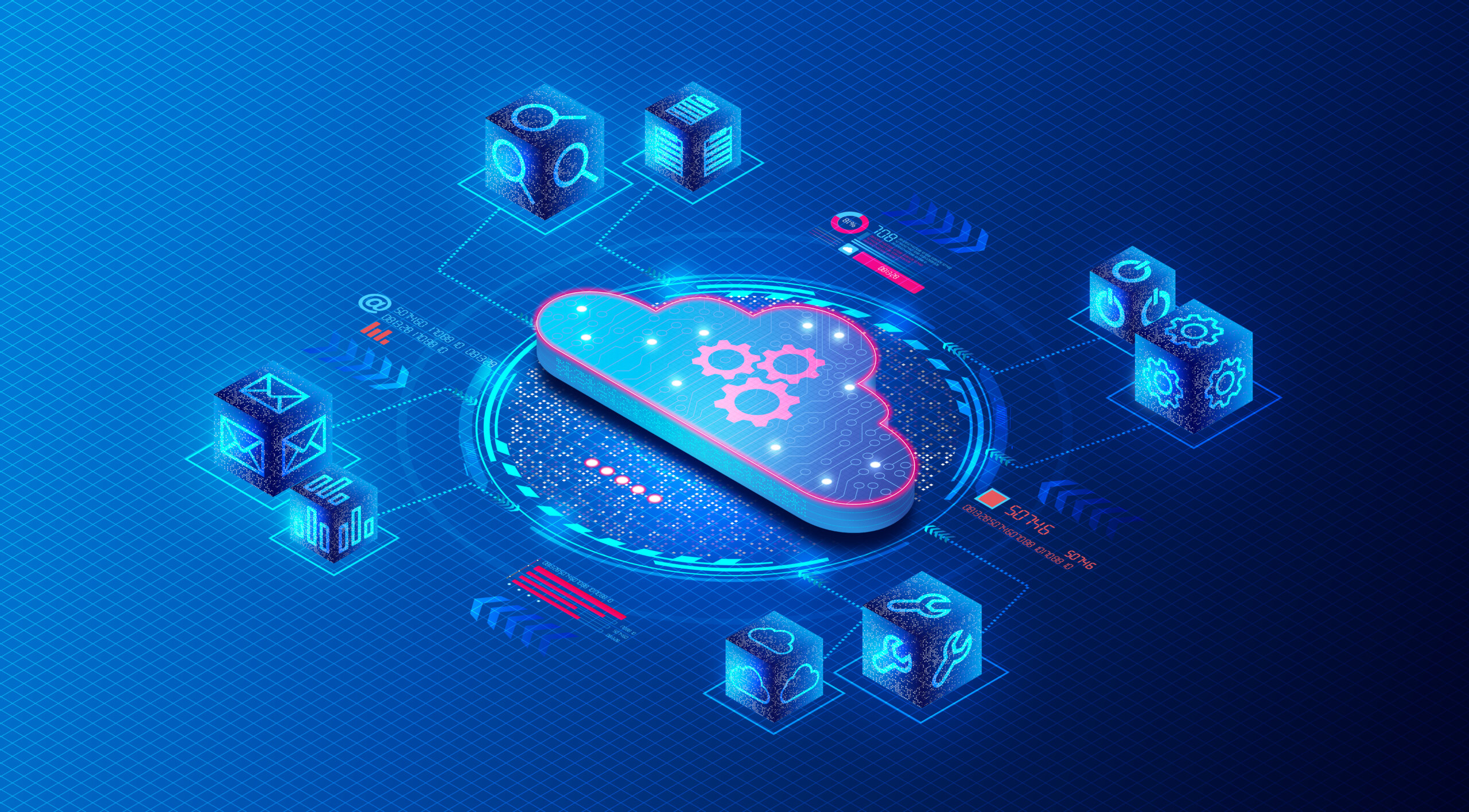
The principle is simple: connect each system once to a central integration layer instead of linking every application to every other one. The integration layer then takes care of what each point-to-point interface used to do on its own – protocol translation, field mapping, format conversion, validation, routing, scheduling and error handling.
Depending on the use case, different integration patterns work side by side on this layer. An Enterprise Service Bus (ESB) moves messages between operational systems in real time, synchronously or asynchronously. ETL processes extract, transform and load larger volumes in batches, for example into a data warehouse. APIs make selected data available to portals, apps and partners in a controlled way. Central monitoring shows at a glance which flows are running, which have failed and why – so errors are fixed at the source instead of being discovered in a report weeks later.
Édouard Cante
Chief Product Officer
Build a trustworthy data foundation to enable AI-driven automation and reliable decision-making
Data integration is not a new topic, yet it is often postponed. Compared with a new portal, an analytics programme or an AI pilot, reorganising data flows looks like infrastructure work with no visible return. In reality it is the step everything else depends on: business applications, cloud services, IoT and hybrid architectures only deliver value when the data they consume is consistent, complete and available on time.
Where data integration is missing, the symptoms are familiar. Old and new applications talk to each other through a growing web of point-to-point interfaces. Every system speaks its own data format, so each exchange needs custom code. Errors are hard to trace because there is no central place to look. IT teams spend their time maintaining interfaces and correcting records instead of delivering projects, while business teams reconcile spreadsheets by hand. Over time, poorly orchestrated exchanges also erode data integrity: values become incomplete, inconsistent or contradictory between systems, and nobody can say with certainty which version is correct.
The good news: a structured data integration strategy can be introduced step by step, whatever the maturity of your organisation – starting with the flows that hurt most. Testo, for example, uses X4 BPMS as a central integration and orchestration layer between its PRIMAS customer portal, SAP and a SharePoint-based DMS, synchronising more than 4 million test items and over 10 million certificates while decoupling the portal from the upcoming move to SAP S/4HANA (read the Testo story). The utility Westfalen Weser Netz replaced isolated solutions with one integration platform connecting SAP, GIS, DMS, Office and the portals of external service providers (read the Westfalen Weser Netz story).
Birgit Schmidt
Technical Project Management, Westfalen Weser Netz GmbH
Data flows through the entire organisation: it feeds processes, applications, reports and, increasingly, AI models. Improving how data is collected, checked and transported therefore improves the performance of everything that runs on it. Quality checks happen before data is distributed rather than after an error has spread. Synchronous and asynchronous transfers run automatically instead of through scripts and exports. Updates reach every connected system at once, so reports are always current and teams in different locations work from the same information.
The role of data integration has also changed with the arrival of enterprise AI. Your AI is ready. Your data isn’t. Language models and AI agents are only as reliable as the data they can reach, and they cannot compensate for three systems that disagree about the same customer. A governed integration layer – with documented transformations, recorded lineage and clear ownership – is what allows AI to work from sources that are known to be current and correct.
For IT leaders, data integration is not an end in itself. Its objectives need to be explained across the organisation so that business teams understand why it comes first. But when is the right time to act, and what does it deliver?
Alexis de Saint Jean
Lasting data integration means more than moving data from A to B. It means being able to organise flows, centralise and enrich reference data when needed, and pass every change on automatically to the entire application landscape. SoftProject brings these capabilities together on one converged platform rather than a set of separately bought tools.
Organise your flows. The ESB and ETL capabilities of X4 BPMS and Phoenix connect your applications through a standardised exchange layer. Instead of fetching data from every source, applications receive it from the integration layer, which converts formats and protocols so heterogeneous systems can communicate. More than 200 standard adapters cover ERP, CRM, databases, files, cloud services and industry protocols.
Centralise your reference data. Master data management establishes one authoritative version of customers, products and suppliers. Working together with the integration layer, it distributes the same validated information to every application – eliminating duplicates and silos instead of copying them.
Govern and expose your data. MyDataCatalogue automatically documents what data exists and where, while dataspot. adds business meaning, ownership and data lineage. API management makes selected data available to portals, partners and AI applications under clear rules. The result: reliable, traceable and sustainable data exchange – an integration layer you can grow on rather than rebuild. For a deeper look at the architecture, read our guide to the data integration platform.
Execute business processes with speed and reliability.
X4 BPMS enables organizations to model, automate and run business processes efficiently in daily operations. By combining human tasks, integration and process logic, X4 BPMS ensures consistent execution, faster throughput and sustainable operational improvement.
Would you like to discover easy data integration in practice with a demonstration?
Data integration is the process of combining data from different sources – such as ERP, CRM, databases, files and cloud applications – into a consistent, validated format and making it available to the systems, processes and people that need it. It includes connecting the sources, transforming the data, checking its quality and delivering it in batches or in real time.
Almost every business initiative depends on it. Reporting, process automation, customer portals, compliance and AI all assume that data from different systems is consistent and available. Without data integration, these initiatives inherit contradictory records and manual workarounds instead of removing them.
The most common challenges are growing numbers of point-to-point interfaces, heterogeneous data formats, legacy systems alongside cloud applications, poor data quality, missing traceability when a flow fails, and the effort of maintaining custom code. Security and compliance requirements add further complexity.
Start with the business objectives: which decisions, processes or projects need better data? Then map the source and target systems, assess the quality of the data involved and choose an architecture that is scalable, secure and open to future changes. Begin with the flows that cause the most friction and extend the integration layer step by step.
ETL (extract, transform, load) moves larger data volumes in scheduled batches, typically into a data warehouse for analysis. An Enterprise Service Bus routes and transforms messages between operational systems in real time. Modern integration platforms combine both patterns, so the right one can be chosen for each flow.
Real-time data integration transfers changes to connected systems as soon as they occur, rather than in nightly batches. It is essential for operational processes such as order handling, stock levels or customer service, where decisions depend on current data.
Interoperability describes the ability of systems to exchange data and understand each other. Data integration is the work that achieves it: connecting the systems, harmonising formats and delivering consistent data. Learn more in our guide to interoperability and data flows.
AI models and agents can only be as reliable as the data they access. Data integration keeps sources synchronised and consistent, while data governance adds definitions, ownership and lineage. Together they ensure AI works from data that is current, understood and traceable.
Check whether the solution covers the systems you actually run, supports both real-time and batch integration, can run on-premises, in the cloud or in hybrid environments, offers central monitoring and lets business teams adapt flows without extensive coding. Also consider whether it combines integration with process automation and data governance, or whether you would need additional tools.
You are currently viewing a placeholder content from Accessibility Widget. To access the actual content, click the button below. Please note that doing so will share data with third-party providers.
More InformationYou are currently viewing a placeholder content from Vimeo. To access the actual content, click the button below. Please note that doing so will share data with third-party providers.
More InformationYou are currently viewing a placeholder content from YouTube. To access the actual content, click the button below. Please note that doing so will share data with third-party providers.
More InformationYou need to load content from reCAPTCHA to submit the form. Please note that doing so will share data with third-party providers.
More InformationYou are currently viewing a placeholder content from TrustIndex. To access the actual content, click the button below. Please note that doing so will share data with third-party providers.
More Information